Data Science vs Digital Marketing: Which Career Is Better in 2026?
If you have been scrolling through career forums lately, you have probably seen the same debate pop up again and again: Should I go into data science or digital marketing? Both fields are booming. Both promise great salaries. And both seem to be everywhere in job listings.
But here is the truth: neither is universally "better". The right choice depends entirely on your interests, strengths, and long-term goals. In this guide, we break down both careers side by side using real 2026 data, so you can make a confident decision about your next move.
Overview of Both Careers
Let's start with the basics.
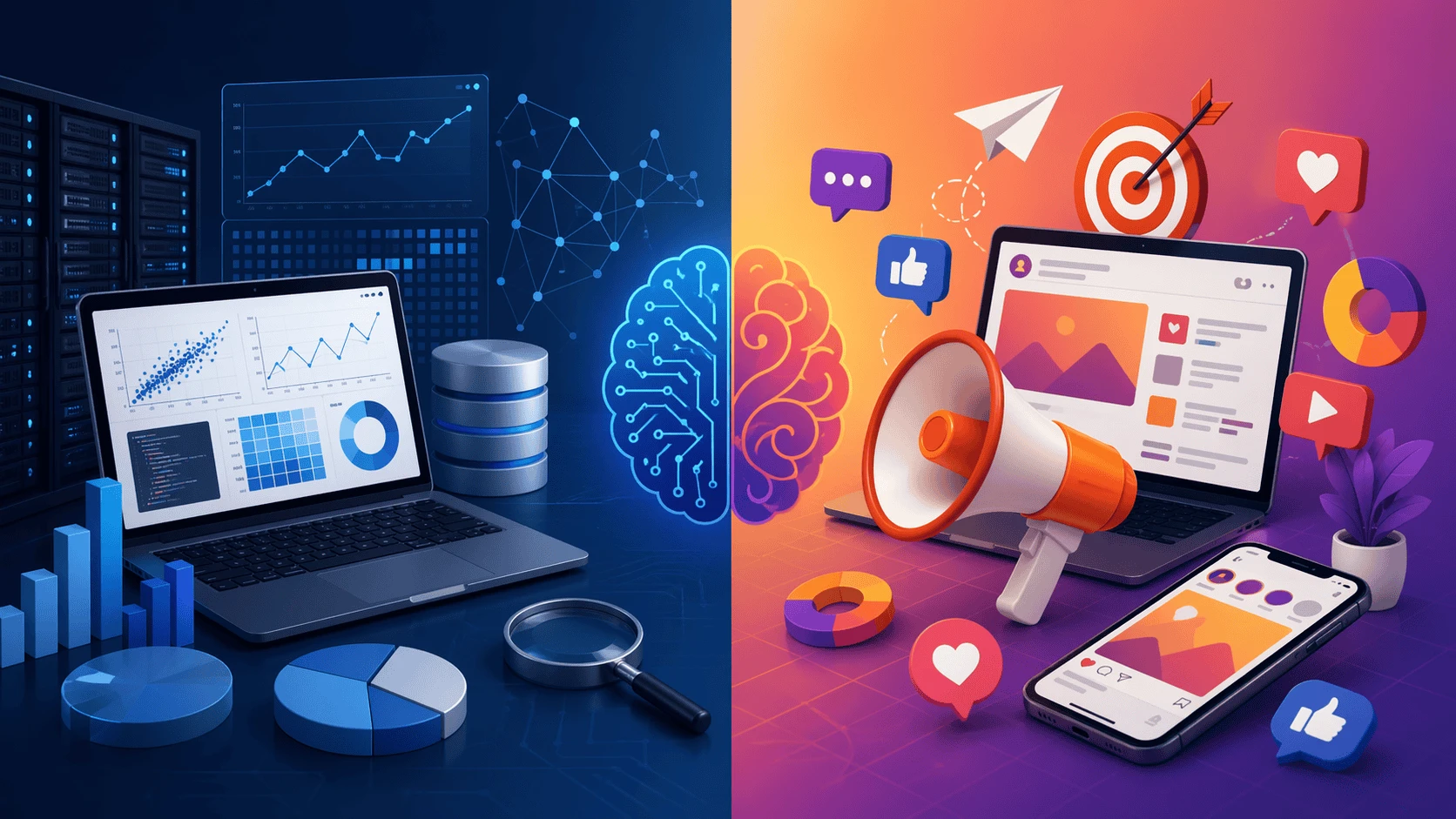
Data Science is about extracting insights from data. You collect, clean, and analyze large datasets to help businesses make smarter decisions. Think predicting customer churn, optimizing pricing models, or building recommendation engines. It is part statistics, part programming, and part business strategy.
Digital Marketing is about reaching and engaging audiences online. You plan campaigns across search engines, social media, email, and content platforms to drive brand awareness, leads, and sales. It blends creativity with analytics, requiring you to understand both human behavior and platform algorithms.
Both careers are in high demand. According to the Ipsos Digital Marketing Report 2025-26, India's digital advertising spend is projected to reach ₹56,400 crore in FY2026, growing at 15% year-on-year and now commanding 44% of total ad spend. On the data side, industry reports indicate data science roles are growing at 25-30% annually across IT, BFSI, and e-commerce sectors, with India expected to need 7-11 million data and analytics professionals by 2026.
Key Differences at a Glance
| Factor | Data Science | Digital Marketing |
|---|---|---|
| Core Skills | Python, SQL, statistics, and machine learning basics | SEO, content strategy, paid ads, analytics tools |
| Learning Difficulty | Steeper curve; requires comfort with math and logic | Gentler start; creativity and communication matter more |
| Time to Job-Ready | 6 to 12 months with structured learning | 3 to 6 months with hands-on practice |
| Average Entry Salary (India) | ₹5 to ₹9 lakhs per year | ₹3 to ₹6 lakhs per year |
| Job Demand (2026) | High in tech, finance, and healthcare | High across all industries, especially D2C and startups |
| Work Style | Deep focus, problem-solving, often independent | Collaborative, fast-paced, campaign-driven |
Skills Required: What You Actually Need to Learn
Data Science Essentials
- Programming: Python or R for data manipulation and modeling
- Data Handling: SQL for databases, pandas for cleaning data
- Statistics: Understanding distributions, hypothesis testing, regression
- Machine Learning Basics: Familiarity with scikit-learn, model evaluation
- Visualization: Tools like Matplotlib, Tableau, or Power BI
- Business Acumen: Ability to translate insights into actionable recommendations
If math feels intimidating, do not worry. Many data science course online programs now start with fundamentals and build up gradually. The key is consistent practice.
Digital Marketing Essentials
- SEO and Content: Keyword research, on-page optimization, content planning
- Paid Advertising: Google Ads, Meta Ads, campaign budgeting and targeting
- Analytics: Google Analytics, conversion tracking, A/B testing
- Social Media Strategy: Platform-specific content, community management
- Email and Automation: Drip campaigns, segmentation, tools like Mailchimp
- Basic Design Sense: Understanding visuals, CTAs, and user journey mapping
An advanced digital marketing course that includes live campaign projects and tool access will give you a significant edge over theoretical learning alone.
Salary Comparison in India (2026)
Let's talk numbers, because they matter.
Data Science Salaries:
- Fresher (0 to 2 years): ₹4.5 to ₹10 lakhs per annum
- Mid-level (3 to 5 years): ₹12 to ₹22 lakhs per annum
- Senior/Lead (6+ years): ₹25 to ₹40+ lakhs per annum
Digital Marketing Salaries:
- Fresher (0 to 2 years): ₹2.5 to ₹5 lakhs per annum
- Mid-level (3 to 5 years): ₹6 to ₹12 lakhs per annum
- Senior/Lead (6+ years): ₹8.5 to ₹20+ lakhs per annum
Note: All figures are aggregated from AmbitionBox, Glassdoor, and industry reports as of early 2026. Actual offers depend on interview performance, portfolio quality, and negotiation.
Job Opportunities and Growth
Both fields offer strong growth, but the paths look different.
Data Science roles are concentrated in tech companies, banks, consulting firms, and product-led startups. Career progression often moves from Data Analyst to Data Scientist to Senior/Lead roles, with options to specialize in machine learning engineering, analytics leadership, or AI strategy.
Digital Marketing opportunities exist in virtually every industry. You can work in-house for brands, at agencies managing multiple clients, or as a freelance consultant. Growth paths include specialist roles (SEO lead, performance marketer) or broader positions like Marketing Manager, Growth Head, or even CMO.
One advantage of digital marketing: it is easier to build a visible portfolio. Your campaign results, content pieces, or social growth metrics can be showcased directly. In data science, portfolios often rely on GitHub projects or case studies, which are equally valuable but sometimes less immediately tangible to non-technical hiring managers.
Which Career Is Easier to Enter?
If you are coming from a non-technical background, digital marketing generally has a lower barrier to entry. You can start learning core concepts within weeks, run small campaigns for practice, and build confidence quickly.
Data science requires more foundational learning, especially if you are new to programming or statistics. However, this does not mean it is out of reach. Many successful data scientists started with zero coding experience. The difference is the learning curve: expect to invest 6 to 9 months of consistent effort before feeling job-ready.
The good news? Both fields now have excellent data science certification and advanced digital marketing course options designed for beginners. Look for programs that offer:
- Hands-on projects with real datasets or live campaigns
- Mentor support for doubt resolution
- Career guidance and placement assistance
- Flexible schedules for working learners
Who Should Choose What?
Choose Digital Marketing If:
- You enjoy writing, creating content, or visual storytelling
- You like fast-paced work with visible, short-term results
- You are comfortable experimenting and iterating based on data
- You prefer collaborating with designers, writers, and sales teams
- You want to start seeing ROI on your learning within a few months
Choose Data Science If:
- You enjoy solving puzzles and working with numbers
- You are curious about why things happen, not just what happened
- You do not mind spending time cleaning data or debugging code
- You prefer deep work sessions with clear problem statements
- You are willing to invest time upfront for long-term technical mastery
Still unsure? Ask yourself: would I rather spend a Tuesday afternoon writing a compelling ad copy or building a predictive model? Your gut answer often points you in the right direction.